Esbjerg's city center is unique: We can really be proud of it
22. November 2021
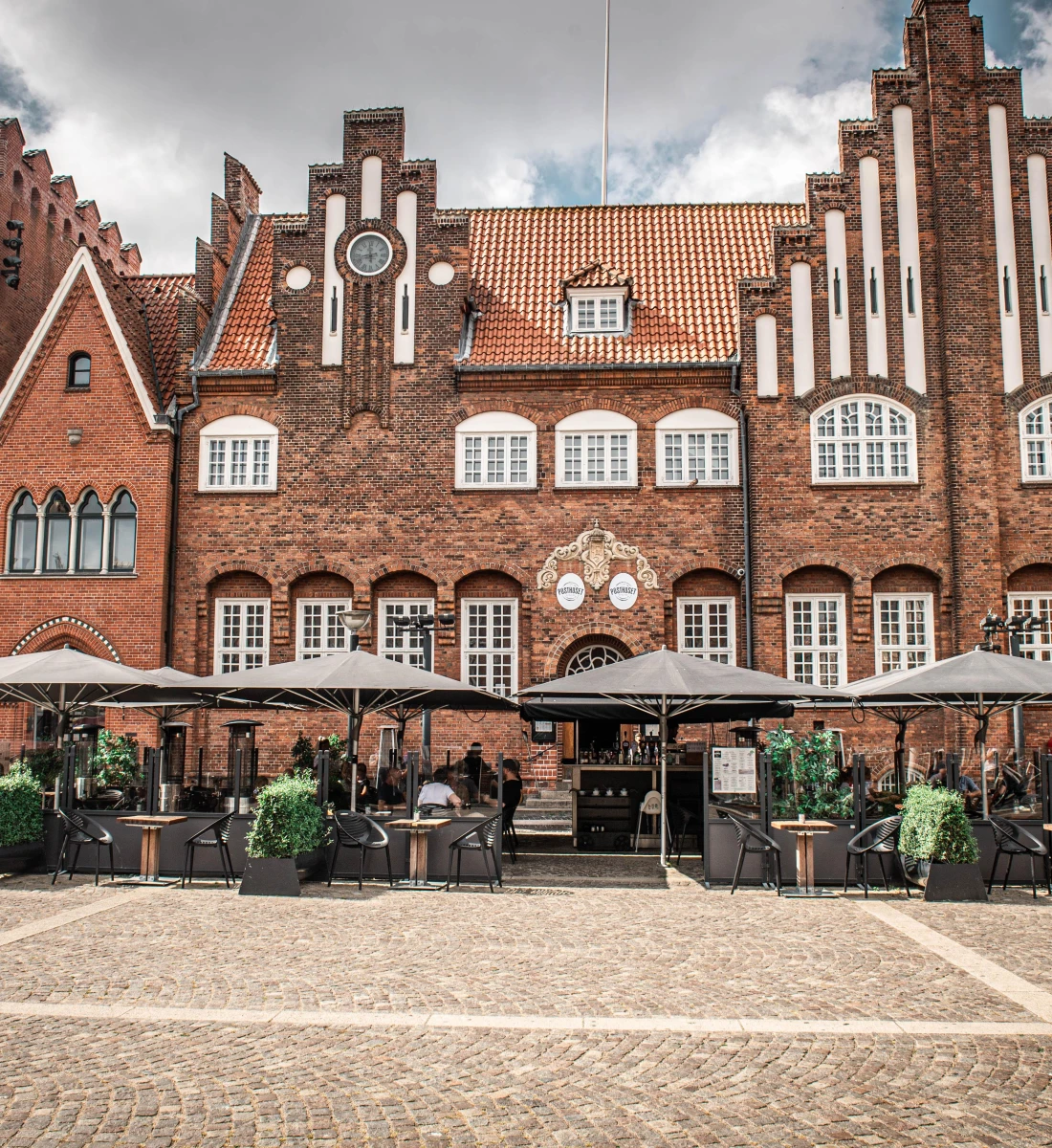
Esbjerg has often had to hear that the city is not pretty or historic. But the buildings in central Esbjerg have actually been designated as unique nationwide, as nowhere else are there so many buildings gathered that all represent one specific architectural style.
Esbjerg has often had to hear that the city is not pretty or historic. But the buildings in central Esbjerg have actually been designated as unique nationwide, as nowhere else are there so many buildings gathered that all represent one specific architectural style.
Central Esbjerg is packed with interesting buildings that make the city center an architectural unique. The old post office and the old bank at the square are two of the beautiful examples of the historicist architectural style that characterizes the city. Photo: Gitte Lindeborg
We have good reason to be proud of our city, which is full of beautiful and interesting buildings, says museum curator.
Esbjerg is Denmark's youngest city with just over 150 years behind it. Precisely the city's age and the fact that it emerged within a few decades after the construction of the harbors from the late 1860s has often been used as an explanation for why one does not find the same harmonious and historically authentic urban spaces as in, for example, Ribe and other older market towns.
But that story is actually not true. On the contrary, Esbjerg's emergence and young age have made the city architecturally unique. The first decades were characterized by great activity, which even developed into a true construction boom. This meant that construction in the 1880s and 1890s boomed during a period known as Esbjerg's 'American' period, where the population grew explosively and the city was significantly expanded with, among other things, schools, churches, and a courthouse and jail.
Although it all ended with an economic crash around 1900, there was now a city that had sprung up within a relatively short time and therefore bore a very clear imprint of the style that was modern in the period: Historicism. Esbjerg's dominant architectural heritage from the city's first intense building period therefore consists of buildings that all represent this specific architectural style. It is completely unique for Esbjerg that such a large part of the building heritage in the center is historicist.
"Central Esbjerg is unique because we have a very well-thought-out city core, which has the most intact and homogeneous whole in relation to the historicist style. This is because there was ambition and an enormously conscious urban planning from the start, where a lot of thought had been put into the city's design. Early rules were made about, among other things, how high houses could be in relation to the street width, ensuring that the proportions were adapted to each other, which provided light and air. This has helped create the city we have today with a number of special qualities, which is why central Esbjerg has been designated a particularly worthy cultural environment for preservation both by the Agency for Palaces and Cultural Properties and by Esbjerg Municipality," says Mette Slyngborg, who is a museum curator at the Southwest Jutland Museums, which currently has a special exhibition at Esbjerg Museum telling about how the city's architecture and planning have created the city we know today.
Stole with arms and legs
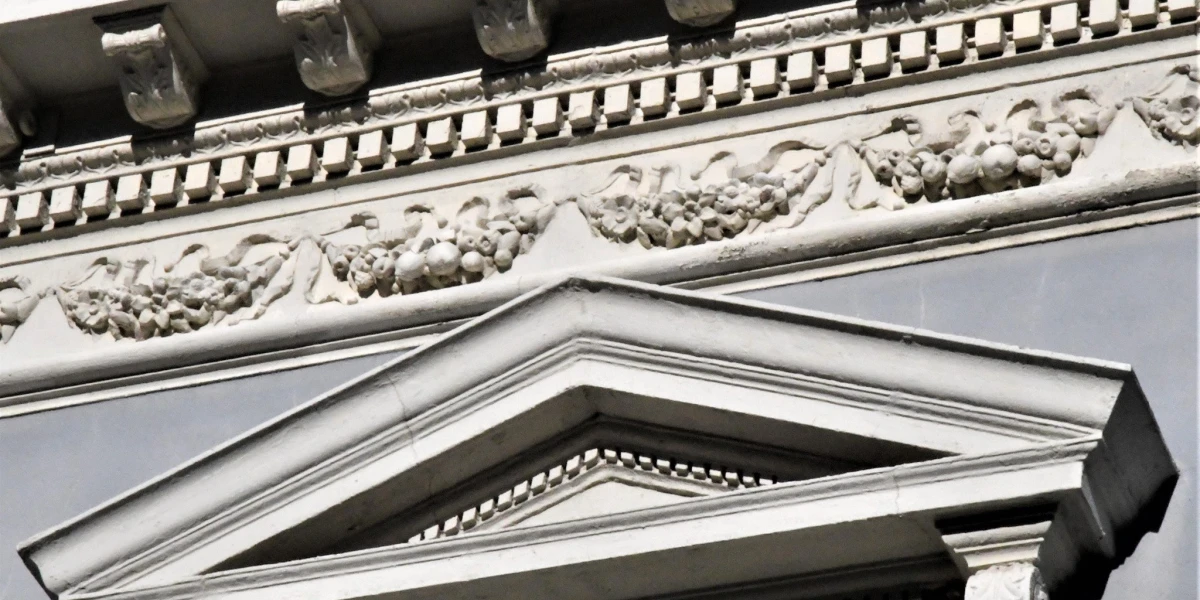
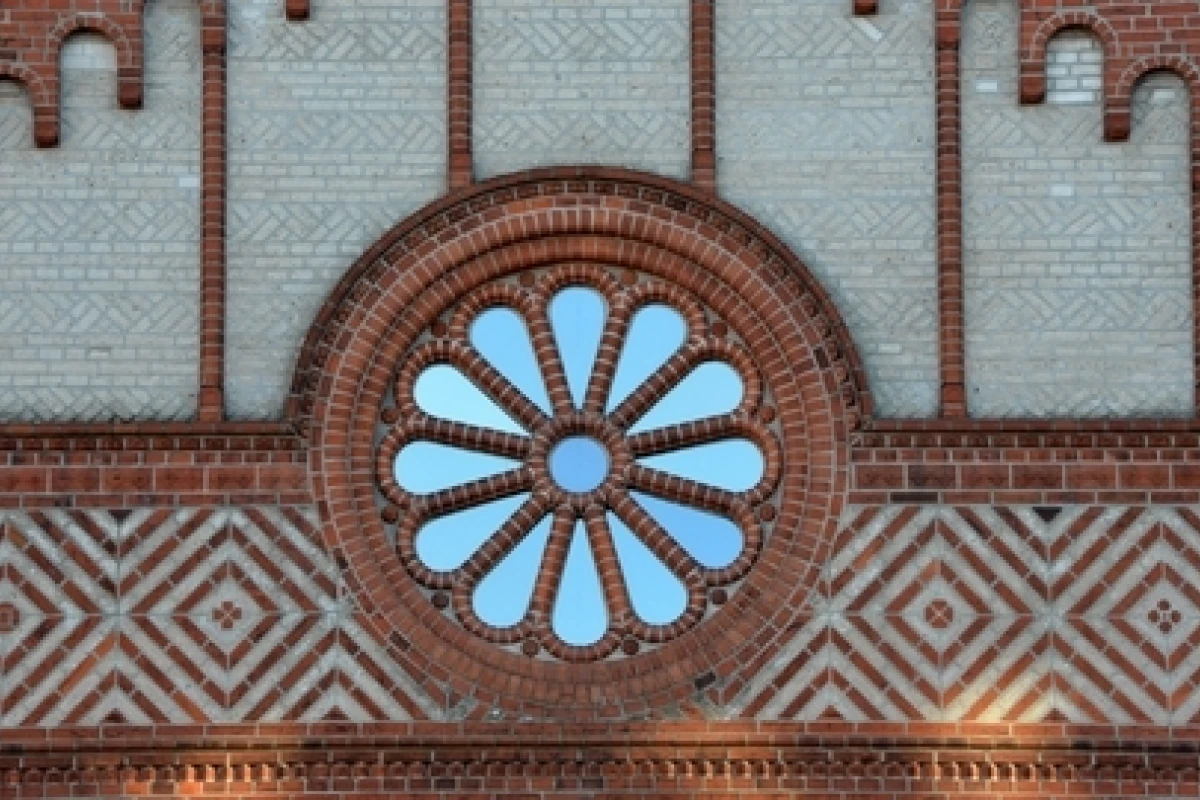
The historicist style, which characterizes Esbjerg's city center and was dominant in Denmark in the period 1850-1920 and in Esbjerg a bit longer, is characterized by inspiration coming from abroad and the building style being more French, Italian, or Swiss than Danish and often a mixture of several styles. Furthermore, there was extensive use of decorative details and effects such as towers, beautifully carved eaves from roofs, finely crafted details, cement decorations, and ornamental half-timbering.
"They copied and stole with arms and legs from earlier times and other places, including Greece, Rome, France, and Germany, and paid great attention to details and symbols. This gives many different expressions and appeals to the eye and senses. One characteristic of the style is that it often expresses what the building contains, so that through symbols and details it shows, for example, whether it is a school or a power plant," explains Mette Slyngborg about the style's characteristics.
Architects of the time created many beautiful houses from the late 19th century until the early 20th century inspired by the great European styles. The water tower is, for example, a copy of a corner house in Nuremberg from the 1300s, the old bank at the square is designed inspired by a palace in Siena, while the courthouse and jail at the square are in Flemish Gothic and the post office on the corner opposite is in Danish manor house style.
Pride and awareness
Although both Esbjerg and the historicist style have been criticized over time, and historicism has been called tasteless and stylistically confused, there is today much greater recognition of both the style and Esbjerg's cityscape.
"Today there is much more attention and respect for Esbjerg's distinctive expression, and architects and people from all over the country come to see the buildings in central Esbjerg," says Mette Slyngborg, who also believes that the people of Esbjerg should be more aware of and proud of their city.
"It is important to tell about this because the more we know, the prouder we become of our roots. I think it is important that we open our eyes to all the beautiful and historically interesting things, as it affects how we experience the city and because we must respect and take care of it. We have a city with many fantastic qualities that we can be proud of," says the museum curator, whose own favorite buildings are the villas in Kirkegade and the many fine institutional buildings such as the mission house, the power plant, the bank, and the courthouse and jail.
Historicism
Historicism, within architecture, is an overall term for the use of past styles and elements. The term can also describe the architecture between 1820 and about 1900, when historical styles such as neo-Gothic, neo-Renaissance, and national romanticism were used.
The 19th century's new ruling class, the bourgeoisie, wished to manifest its power also in architecture, but without tradition for its own symbols, it sought them elsewhere.
The period's increased knowledge of history, national feeling, deeper religiosity, and romanticism's fascination with the past contributed to the use of other than the antique styles.
The characteristic of historicism is that everything was allowed. One borrowed heavily from other styles and periods, which gives a richness of detail that today can seem almost fairy-tale-like. During the 1920s and 30s, this way of building was abandoned. Simplicity was desired and the great richness of detail and style mixing was now considered tasteless.
Sources: Esbjerg Museum and Den Store Danske
Exhibition at Esbjerg Museum
Esbjerg Museum has until October 30, 2022, the special exhibition 'Esbjerg - Timeless Building Culture', which through historical highlights tells about how the city's architecture and planning have created the city we know today.
The exhibition consists of photos, films, and texts and includes a 3D-printed model of the city, whose loose elements guests can move around to create different city expressions.
www.esbjergmuseum.dk/da/udstillinger/esbjerg-alle-tiders-bygningskultur/